
Why the Brazilian Jiu Jitsu Point System Still Matters
In Brazilian jiu jitsu, the point system is often misunderstood—especially by newer students or those coming from other grappling styles.
Some people argue that the Brazilian jiu jitsu point system should be changed or even abandoned.
But the truth is:
The point system in Brazilian jiu jitsu exists for a reason—and it reflects what actually works in a real fight.
Understanding the Brazilian Jiu Jitsu Point System
The Brazilian jiu jitsu point system is built around positional dominance. Each score reflects how close you are to controlling and finishing your opponent.
Here’s how it breaks down:
- 4 Points – Mount or Back Control (with hooks)
- 3 Points – Guard Pass
- 2 Points – Takedown
- 2 Points – Sweep (reversal)
- 2 Points – Knee on Belly
At first glance, these numbers may seem arbitrary.
But they’re not.
Every position in Brazilian jiu jitsu is ranked based on its effectiveness in a real fight.
Why Mount and Back Control Are Worth the Most
In Brazilian jiu jitsu, mount and back control are worth 4 points because they are the most dominant positions.
If this were a real fight:
- From mount, you can strike, control, and finish
- From the back, you can apply submissions while staying safe
These are positions where your opponent has very limited options.
That’s why in Brazilian jiu jitsu, they represent the top of the hierarchy.
Why Passing the Guard Is So Important
Guard passing in Brazilian jiu jitsu is worth 3 points.
Why?
Because getting around your opponent’s legs opens the door to true control.
Once you pass the guard, you can move into:
- Side control
- Mount
- Back control
In other words, passing the guard in Brazilian jiu jitsu is what allows you to begin dominating the fight.
The Role of Takedowns and Sweeps
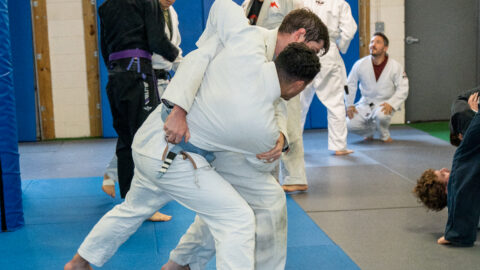
Takedowns and sweeps are each worth 2 points in Brazilian jiu jitsu.
This reflects their purpose.
A takedown or sweep:
- Puts your opponent on their back
- Gives you top position
- Starts the process of control
But unlike judo, where the goal is simply to throw your opponent, Brazilian jiu jitsu is about what happens next.
The fight doesn’t end when someone hits the ground.
That’s where it really begins.
The Point System Keeps Brazilian Jiu Jitsu Honest
One of the biggest benefits of the Brazilian jiu jitsu point system is that it keeps grappling honest.
It encourages students to:
- Seek dominant positions
- Maintain control
- Progress toward a finish
Instead of just chasing submissions from bad positions, students learn to build their attack step by step.
That’s how real skill is developed in Brazilian jiu jitsu.
Climb the Mountain
When I teach Brazilian jiu jitsu, I simplify the goal for my students:
Climb the mountain.
The bottom of the mountain is neutral or defensive positions.
As you improve your position, you move higher:
- Takedown or sweep
- Guard pass
- Side control
- Mount or back
The summit of the mountain in Brazilian jiu jitsu is always:
👉 Mount or back control (with hooks)
That’s where you have the highest level of control and the best chance to finish.
Brazilian Jiu Jitsu Is About Control First
At its core, Brazilian jiu jitsu is not just about submissions.
It’s about:
- Control
- Position
- Efficiency
The point system reflects that philosophy.
It teaches students to:
✔ Earn dominant positions
✔ Stay patient
✔ Apply technique over strength
And ultimately, it builds skills that translate beyond the mat.
Learn Brazilian Jiu Jitsu the Right Way
If you want to truly understand Brazilian jiu jitsu, you need to learn it through a system that emphasizes:
- Structured learning
- Positional progression
- Real skill development
That’s exactly how we teach at Spartan Mixed Martial Arts.
👉 If you’re interested in starting or improving your Brazilian jiu jitsu, you can learn more about our program here: