
If you’re training Brazilian Jiu Jitsu (BJJ) and find yourself neglecting takedowns, you’re missing out on a crucial piece of the puzzle. Sure, pulling guard works, but if you want to truly dominate, you need to add takedowns to your Brazilian Jiu Jitsu arsenal. Trust me—I’ve seen guys transform their entire game just by focusing on their stand-up. So, why are takedowns so important, and how can they give you an edge in BJJ? Let’s break it down.
Why Takedowns Matter in Brazilian Jiu Jitsu
Starting on Your Terms
In Brazilian Jiu Jitsu, the match begins on the feet, so having confidence in your takedowns sets the tone right from the start. By initiating the action, you control the flow of the match. Instead of waiting to react, you’re the one dictating what happens next. This not only gives you the physical advantage but also a psychological one.
When you hit a clean takedown, your opponent is immediately behind in the game. Typically, you will already be on your way to passing the guard or in side control. In the past, I focused entirely on guard pulling, but I soon realized how important it was to have takedowns in my own Brazilian Jiu Jitsu game.
Breaking Your Opponent’s Rhythm and Confidence
Takedowns do more than just score points—they mess with your opponent’s rhythm and mindset. Imagine stepping onto the mat, expecting to pull guard, and within the first few seconds, you’re slammed onto the ground. That can rattle anyone’s confidence, especially if they weren’t expecting it.
Takedowns force your opponent into a defensive position, scrambling to recover. And in Brazilian Jiu Jitsu, controlling the pace is half the battle. If you’re the one making them react, they’re already playing your game, and that’s a huge psychological edge.
Actionable Tip: After landing a takedown, don’t give your opponent a moment to reset. Follow up immediately with pressure, transitioning into a guard pass. Drilling takedown-to-pass sequences regularly will give you the ability to keep the momentum on your side.
Borrowing from Wrestling and Judo: Takedowns You Need to Know in Brazilian Jiu Jitsu
You don’t have to become a full-blown wrestler or judoka to improve your Brazilian Jiu Jitsu takedowns, but learning a few key techniques can elevate your game dramatically. Wrestling and Judo have some of the most effective takedowns, and when applied to BJJ, they can turn you into a more well-rounded competitor.
The Single-Leg Takedown: Your BJJ Bread and Butter
If there’s one wrestling technique every Brazilian Jiu Jitsu athlete should master, it’s the single-leg takedown. Why? Because it’s versatile, effective, and lower-risk compared to other takedowns. The single-leg can seamlessly transition into guard passes, allowing you to maintain control after the takedown.
Not only that, but the single-leg is highly adaptable. You can use it from standing, from the bottom guard to sweep, or even as a tool to escape bad positions like side control. It’s incredibly useful across multiple scenarios in BJJ, which is why it should be your go-to takedown.
In my own training, the single-leg has been a game-changer. During live rolls, when I’m stuck in side control, grabbing my opponent’s leg and working my way into a single-leg escape has saved me more times than I can count.
The Double-Leg Takedown: Power and Precision
While the single-leg is a safer bet, the double-leg takedown is a powerhouse technique. If you can execute it cleanly, the double-leg puts you in a dominant position right away, often landing you in side control or half guard.
The downside is that it can leave you open to submissions, like guillotines, if you’re not careful. But if you drill it properly and protect your neck accordingly, the double-leg can be devastating in competition. Just make sure you’re aware of the risks and practice defending against common counters.
Judo Takedowns: The Art of the Throw
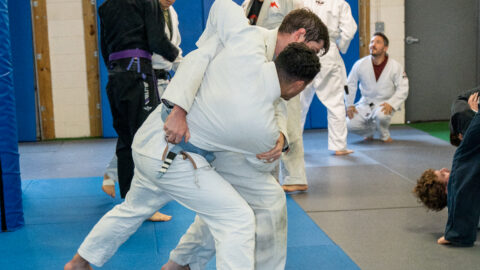
When it comes to Judo, the beauty lies in using your opponent’s momentum against them. Techniques like Ouchi Gari (inside trip) or Osoto Gari (outside trip) allow you to off-balance and throw your opponent without needing brute strength. Judo throws are extremely effective in Brazilian Jiu Jitsu, especially when an opponent is aggressive and pushing forward.
A highly recommended Judo throw to learn is the Uchi Mata (inner thigh throw). It’s a fantastic option when your opponent is trying to stay upright. You can hit it when you’re defending a single-leg or even if they’re overly aggressive on their feet. The throw often leads you to a decent position immediately after landing it.
Judo takedowns are also great for practitioners who aren’t as comfortable with wrestling’s lower-body attacks. The grips and clinches used in Judo translate well to gi-based Brazilian Jiu Jitsu, making them a valuable tool for those who like to play in the clinch.
Actionable Tip: Incorporate Judo trips and throws into your takedown game, especially if you prefer to fight in the clinch or when you’re facing an aggressive opponent. Drill these throws regularly so that you can use them seamlessly in sparring or competition.
Takedowns as a Path to Positional Dominance in Brazilian Jiu Jitsu
One of the biggest advantages of mastering takedowns in Brazilian Jiu Jitsu is how they set you up for positional dominance. Unlike guard pulling, where you have to fight your way into a better position, a successful takedown usually lands you in a spot where you can immediately start applying pressure.
Chain Attacks: From Takedown to Guard Pass
A well-executed takedown should always lead directly into a guard pass. For example, if you hit a single-leg, you can immediately transition into a knee-cut or leg drag pass. The beauty of chaining your takedowns into guard passes is that it gives your opponent little to no time to recover. They’re already on their back, and now they’re defending against a pass before they’ve had a chance to reset.
In my competition days, I always found success by thinking two steps ahead. Takedown first, then pass. The more you drill this combination, the more natural it becomes. Your opponent will have a hard time catching up if you’re constantly a step ahead, and that’s where real dominance happens.
Actionable Tip: Work on chaining your takedowns directly into guard passes during practice. Drill scenarios where you transition from single-leg takedown to knee-cut pass or double-leg to side control. The smoother you make these transitions, the harder it’ll be for your opponent to defend.
Taking Advantage of the Scramble
Scrambles are inevitable in Brazilian Jiu Jitsu, and takedowns often create these opportunities. When your opponent defends or counters a takedown, a brief scramble ensues—and if you’re prepared, you can use that moment to take control.
Takedown attempts don’t always end cleanly, but that doesn’t mean you’ve lost your chance. Being able to maintain composure and react quickly during a scramble can make the difference between ending up on top or getting swept.
One of my students once won a match purely because he stayed calm during a scramble after a failed takedown attempt. His opponent overcommitted in defending, and my student quickly capitalized by securing back control, leading to a match-winning submission. Scrambles are chaotic, but they’re also opportunities if you know how to read the situation.
Conclusion: Takedowns Unlock a New Level of Brazilian Jiu Jitsu Mastery
If you’re serious about improving your Brazilian Jiu Jitsu game, it’s time to stop ignoring takedowns. They’re more than just a way to score points—they set the stage for positional dominance, give you a psychological edge, and open up opportunities for guard passes and submissions.
The more you integrate takedowns into your BJJ game, the more complete of a grappler you’ll become. So, the next time you’re on the mat, instead of pulling guard, consider hitting a clean single-leg or double-leg takedown. You’ll notice the difference in your control and confidence almost immediately.
And remember, takedowns aren’t just for standing—they’re tools you can use from various positions to dominate and keep your opponent on the defensive. Master them, and you’ll take your Brazilian Jiu Jitsu to the next level.
-JH